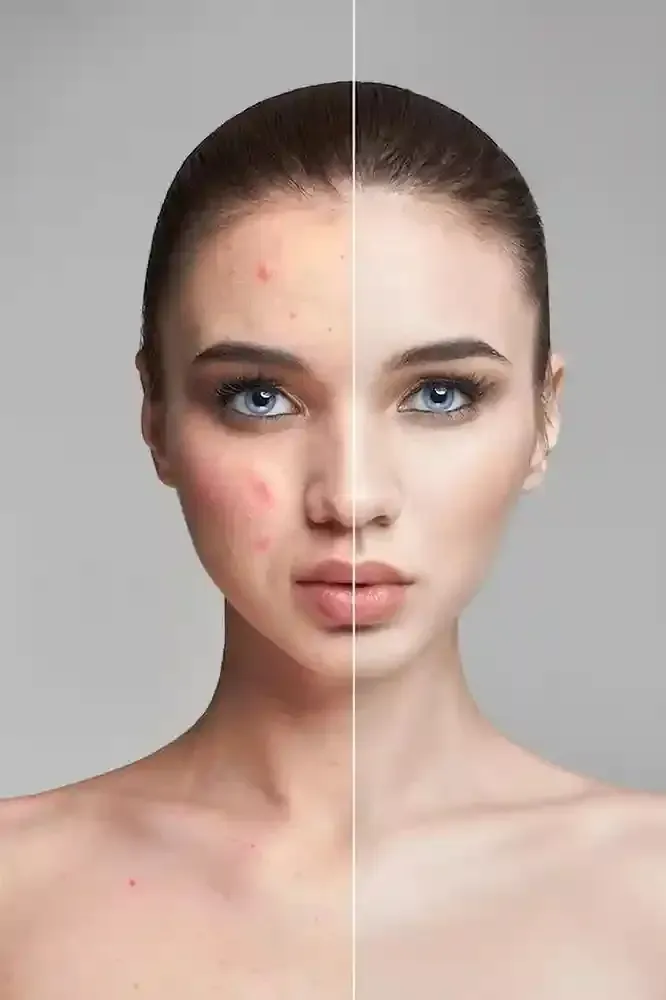
Dermal Exosomes or MSC Exosomes?
Not All Exosomes Are Created Equal: Why Dermal Exosomes Are the Specialist Solution for Skin Rejuvenation
You’ve probably heard the buzz. "Exosome therapy" is the hottest topic in regenerative aesthetics, and for good reason. It represents a massive leap forward from older treatments, promising to regenerate skin at a cellular level.
But here is the secret most clinics won't tell you: the source of the exosomes is the single most important factor for getting results.
Using the wrong type of exosome for a facial treatment is like hiring a firefighter to build you a new house. They’re both incredible specialists, but you’re using the wrong one for the job.
The market is flooded with "generalist" exosome products, typically derived from "Mesenchymal Stem Cells" (MSCs) from bone marrow or umbilical cords.1 At WHOLE BODY, we take a specialist approach. We use Dermal Exosomes, and the science clearly shows why this choice is the key to unlocking true skin rejuvenation.
Here’s the difference.
What Are Exosomes, Anyway?
Think of exosomes as tiny, powerful messengers. They are nano-sized delivery vehicles that your cells release to send "instruction packets" to other cells.2 These packets are loaded with proteins, growth factors, and microRNAs (miRNAs) that tell the recipient cells how to behave, repair, and regenerate.4
The critical takeaway is this: An exosome’s message is 100% dependent on the cell that sent it.5 An exosome from a bone cell carries instructions for bone. An exosome from an immune cell carries instructions for inflammation.
And an exosome from a skin cell? It carries the precise, native blueprints for building new skin.
The "Wrong Tool": Why Most Clinics Use MSC Exosomes
Most exosome treatments use MSCs (Mesenchymal Stem Cells) sourced from bone marrow or umbilical cord tissue.1 These are powerful cells, but what is their primary job?
They are "Generalist Healers" or "Firefighters."
The cargo inside an MSC exosome is overwhelmingly packed with signals designed for one main purpose: potent anti-inflammation.6 Their job is to show up to a 5-alarm fire in the body—like a severe burn 7, a diabetic ulcer 8, or an autoimmune disease like psoriasis 9—and shut down the massive inflammatory immune response.
But is your skin aging a 5-alarm inflammatory fire? No.
Visible skin aging—wrinkles, laxity, and thinning—is a structural failure.10 It's a "communication deficit" where your skin's builder cells (fibroblasts) have stopped getting the right signals to produce collagen. Using a potent anti-inflammatory to fix a structural problem is a fundamental mismatch.
The "Specialist Solution": How Dermal Exosomes Rebuild Collagen
At WHOLE BODY, we use Dermal Exosomes. These are homologous—they are derived from skin cells (fibroblasts) to treat other skin cells. They speak your skin's native language.
Instead of just calming inflammation, their cargo is designed to do one thing: rebuild the skin's matrix.
Scientific analysis reveals they use a sophisticated, two-part "Build & Protect" mechanism.11
THE "BUILD" SIGNAL: Dermal Exosomes are loaded with the specific proteins (like ANP32B and TGF-β1) that act as the "on switch" for collagen synthesis. They signal your fibroblasts to start manufacturing new Type I collagen, the main structural protein that makes skin firm and youthful.11
THE "PROTECT" SIGNAL: At the exact same time, they deliver a second set of instructions. This cargo includes high levels of TIMP-1, a protein that neutralizes the "collagen-eating" enzymes (MMPs) in your skin. They also tell the cell to stop making so many of these destructive enzymes in the first place.11
This is the skin's natural, intelligent system of homeostasis. It doesn't just build; it builds and protects its investment. This is the only way to achieve a true, lasting increase in collagen density.
The "Whole Body" Difference: It Takes a Network
Our specialist approach goes even deeper. We understand that your skin isn't just one type of cell. It’s a complex, communicating network between the epidermis (the surface) and the dermis (the deep, collagen-producing layer).13
To truly rejuvenate the skin, you have to replicate the entire communication chain.
Signal 1: The "Activation" (from Keratinocytes): Your surface skin cells (keratinocytes) send their own exosomes (K-Exos) down to the dermis. These contain a special protein (HSP 90α) that acts as the "activation signal," telling dormant fibroblasts to "wake up and get to work!".14
Signal 2: The "Blueprints" (from Fibroblasts): Once activated, the fibroblasts are ready to receive the "Build & Protect" blueprints, which are delivered by the Dermal Fibroblast Exosomes (DF-Exos).11
A generic MSC treatment misses this entire native signaling system. Our protocol is designed to mimic this precise, two-part activation and rebuilding process, which is why our patients see such transformative results.
The Proof: What the Biopsies Show
This isn't just theory. The clinical data is conclusive.
In a landmark 2023 "split-face" human study, patients received microneedling with an exosome solution on one side of their face and microneedling with a simple saline control on the other.15
The results were stunning. The exosome-treated side showed statistically significant improvements in wrinkles, roughness (Ra, Rt, Rz), and elasticity.15
But here is the smoking gun: At the end of the study, researchers took tiny skin biopsies from both sides of the patients' faces. Under a microscope, the proof was undeniable. The side treated with exosomes showed a "greater density of collagen and elastic fibers" and "increased deposition of newly synthesized collagen".15
This is the ultimate goal of regenerative aesthetics: not just a temporary "plumping," but a measurable, physical change in the structure of your skin.
A Safer, Smarter, "Cell-Free" Therapy
On top of being more effective, our Dermal Exosome therapy is also a safer, more advanced "cell-free" treatment.
Unlike controversial live stem cell injections, exosome therapy uses only the messengers, not the cells themselves. This means it has a much lower risk of immunogenicity (your body rejecting it) and carries no risk of uncontrolled cell differentiation or tumor formation.16 It is the intelligent, purified, and stable future of regenerative medicine.
Your Skin Deserves a Specialist
Don't settle for a "generalist" treatment and hope for the best. Your skin is a specialist organ, and it deserves a specialist signal.
If you are ready to move beyond generic solutions and leverage the most advanced, targeted science for skin rejuvenation, we’re here to help. Contact WHOLE BODY today to schedule your consultation and discover what a specialist exosome treatment can do for you.
References
Harrell CR, Dulfu-Bâcean G, B D, et al. Mesenchymal stem cells and their functions in skin wound healing and regeneration. Curr Stem Cell Res Ther. 2022;17(6):513-523. doi:10.2174/1574888X17666220302095349
Yilmaz O, Pinar O, Coskun E. Mesenchymal stem cell-derived exosomes: A new therapeutic strategy. J Med Palliat Care. 2024;5(1):301-306. doi:10.51932/jmpc.1374526
De Caires S, Chand S, Diaz-Rohrer B, et al. Exosome biogenesis, uptake, and signaling in innate immunity. Front Immunol. 2025;16:1362900. doi:10.3389/fimmu.2025.1362900
Zhang L, Yu D. Exosomes from mesenchymal stem cells: A novel weapon for cancer therapy. J Cancer. 2018;9(18):3307-3319. doi:10.7150/jca.24647
Miceli V, La Sala A, Masi G, et al. Exosomes in skin wound healing. Appl Sci. 2024;14(16):7252. doi:10.3390/app14167252
Jafarinia, M, Al-Saqqar M, Al-Sabri MH, et al. Roles of mesenchymal stem cell-derived exosomes in mechanisms of radiation-induced damages. J Biomed Sci. 2021;28(1):9. doi:10.1186/s12929-020-00702-8
Kim Y, Lee Y, Kim H, et al. Therapeutic potential of mesenchymal stem cell-derived exosomes for skin diseases. Cells. 2020;9(5):1157. doi:10.3390/cells9051157
Li Y, Zhang C, Chen Y, et al. Exosomes derived from iMSCs accelerate diabetic wound ulcer healing via the PI3K/Akt/mTOR pathway. Stem Cell Res Ther. 2023;14(1):275. doi:10.1186/s13287-023-03504-1
Wang Y, Lyu M, Li W, et al. Mesenchymal stem cell-derived exosomes in psoriasis: a systematic review and meta-analysis. Biomedicines. 2025;13(9):2093. doi:10.3390/biomedicines13092093
Khan H, Asim M, Jamil A. The role of dermal fibroblasts in skin aging. Front Pharmacol. 2025;16:1592596. doi:10.3389/fphar.2025.1592596
Hu S. Exosomes Derived from 3D Spheroid Culture of Human Dermal Fibroblasts Attenuate Skin Photoaging. [Master's thesis]. Duke University; 2019. Accessed November 16, 2025. https://dukespace.lib.duke.edu/server/api/core/bitstreams/3dae713f-1169-4f25-80af-28b93e4a6c4c/content
Seo AR, Kim JH, Kim SY, et al. Exosomes from dermal stem/progenitor cells promote type I collagen synthesis in dermal fibroblasts. Biol Pharm Bull. 2022;45(7):970-977. doi:10.1248/bpb.b21-01084
Slominski AT, Slominski RM, Zmijewski MA, Wortsman J. The role of the hypothalamic-pituitary-adrenal axis in the regulation of skin homeostasis. Horm Res Paediatr. 2020;93(3):171-181. doi:10.1159/000508104
Wei M, Chen X, He H, et al. Keratinocyte-derived exosomes enhance the migration of dermal fibroblasts. Front Cell Dev Biol. 2021;9:736022. doi:10.3389/fcell.2021.736022
Yoon S, Kim YK, Kwon S. Efficacy of combined treatment with human adipose tissue stem cell-derived exosome-containing solution and microneedling for facial skin aging: A 12-week prospective, randomized, split-face study. J Cosmet Dermatol. 2023;22(11):3058-3066. doi:10.1111/jocd.15872
El-Bassyouni T, El-Shorbagy N, El-Gazzar A, et al. The potential application of stem cell-derived exosomes in skin photoaging: a review on molecular mechanisms. Aging (Albany NY). 2024;16(1):1279-1300. doi:10.18632/aging.205466
